Industries
Six sectors, six different approval paths.
No two developments clear the same set of authorities. We work across six sectors in India, and we map the regulatory path to the one in front of us.

Industrial manufacturing
A manufacturing plant turns on its pollution-control consents. Before a single machine is installed, the project needs Consent to Establish, and before production begins, Consent to Operate, each tied to the emissions, effluent, and hazardous-waste profile of the process.
Heavier processes also draw Environmental Clearance and a longer chain of safety and departmental sign-offs. The approval path here is defined by what the plant will discharge, not only by what it will build.

IT parks and technology campuses
A technology campus lives or dies on its planning permissions. The path runs through DTCP and CMDA approvals, layout and building plan sanction, and the floor-space and density rules that govern a large multi-block site.
Get the planning sequence right at the outset and the rest follows in order. Get it wrong and the whole campus reworks around it.

Warehousing and logistics parks
A logistics park is shaped by how goods move in and out. The approval path leans heavily on transport and access clearances: traffic and highways no-objection certificates, public works coordination, and access-road sanction.
Land conversion and fire safety still apply, but the binding constraints are the connections to the road and rail network the park depends on.

Data centres
A data centre is an energy project as much as a building. Its approval path is dominated by power: load sanction, utility coordination, and the final energization that lets the facility run, alongside the environmental load that high-density power and cooling create.
Diesel backup, water use, and emissions all pull in pollution-control consents. The path is sequenced backwards from the day the racks need power.

Commercial developments
A commercial development answers to the municipal corporation and to public-safety departments. The path runs through municipal building permissions, fire-department clearance, and traffic-department sign-off for parking and access.
Occupancy depends on these being closed in the right order, so the path is defined by the bodies that govern public buildings and the people who use them.
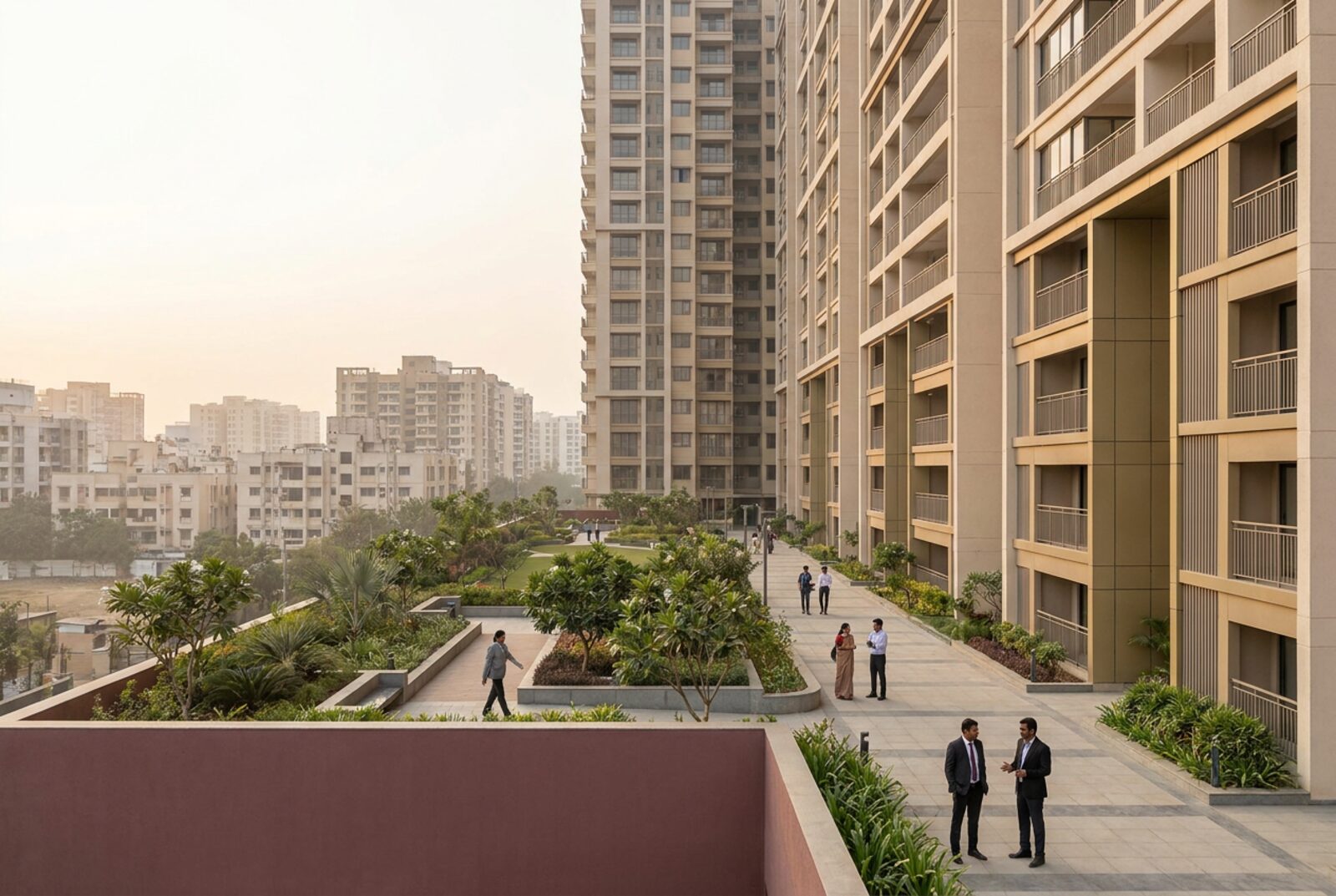
Large residential projects
A large residential project starts with land. The path is shaped by land-ceiling compliance, zone change and reclassification, and clearances from local governing bodies and the BDO where the site sits outside corporation limits.
Layout sanction, water and drainage, and fire safety follow. The binding work sits early, in proving the land is legally ready to carry the density planned for it.
Begin
Tell us what you are building.
Share the sector and the site. We will set out the approvals it needs and the order they have to clear in.